
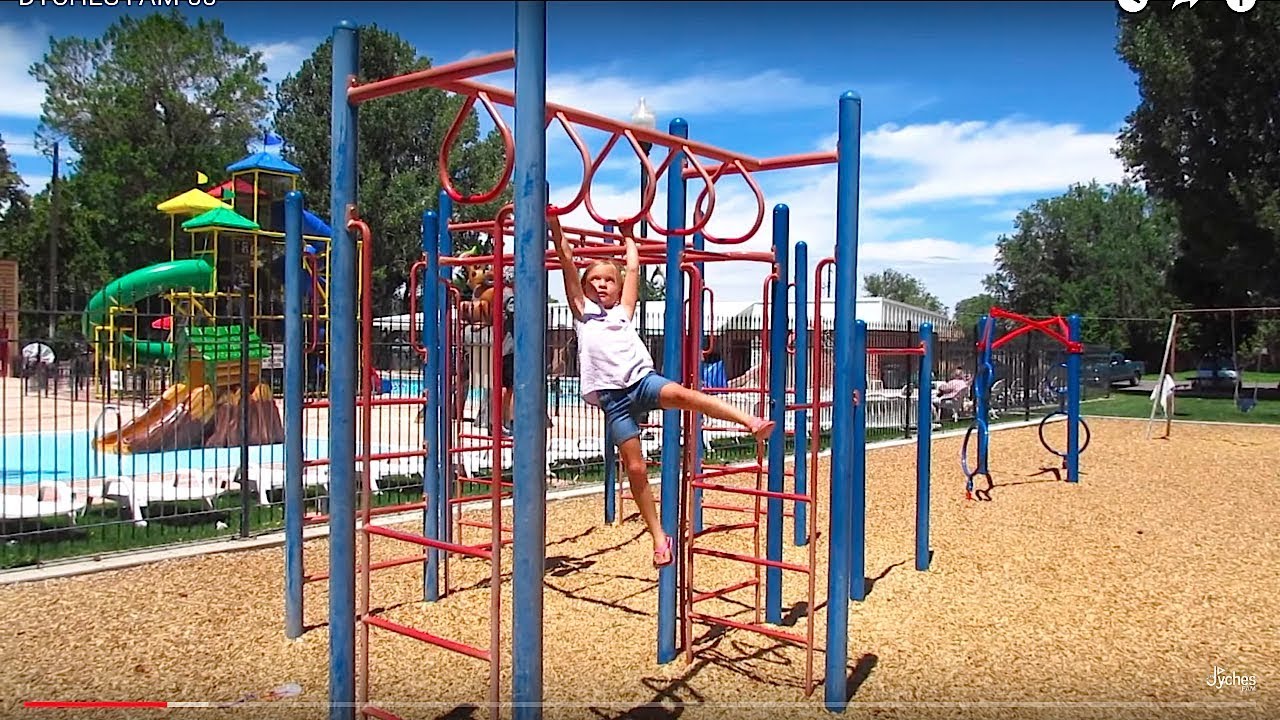

Most parents think about active play in terms of tiring kids out before bedtime. Fair enough — but that framing misses something more interesting happening underneath the surface. When a child hangs from a bar, swings on a rope, or works out how to cross a gap between platforms, they’re not just burning energy. They’re building neural pathways tied to spatial reasoning, risk assessment, and self-regulation — skills that show up years later in classrooms, sport, and social situations. Understanding monkey bars Australia-wide as a developmental tool, not just a piece of backyard equipment, changes how parents think about what’s actually worth investing in for their kids.
Developmental psychologists have long pointed to “risky play” — climbing high, moving fast, swinging with momentum — as a category of activity children instinctively seek out, because it teaches them to judge their own limits in a low-stakes environment. Removing all risk from a child’s world doesn’t make them safer in the long run; it removes the practice reps they need to develop sound judgement. Well-designed play equipment gives kids a controlled version of that risk, with genuine safety measures in place, rather than leaving them to chase the same instinct somewhere less supervised.
What Climbing Actually Builds Beyond Muscle
Grip strength and shoulder stability get most of the attention when adults talk about climbing equipment, but the cognitive load involved is arguably more significant. Every time a child attempts to cross a set of bars, they’re running a rapid sequence of calculations: how far to reach, how much grip pressure to apply, how to time the release of one hand before securing the next. That’s executive function in action — the same mental skillset later used for planning, sequencing, and impulse control.
Monkey bars in particular offer a combination of physical and cognitive demand that’s genuinely hard to replicate with passive equipment. A slide requires almost no problem-solving once a child has done it once. Bars, by contrast, demand fresh calculation nearly every attempt, especially as fatigue sets in partway across — which is precisely why children who persist with them tend to show noticeable gains not just in strength, but in frustration tolerance and self-belief.
There’s also a social dimension worth noting. Climbing equipment is rarely used in isolation — siblings and friends cheer each other on, compare techniques, and problem-solve together about the best way to tackle a tricky section. That kind of peer scaffolding is a well-documented driver of skill acquisition in young children, arguably more effective than adult instruction in many cases.
Swings and the Overlooked Role of Vestibular Development
If climbing builds executive function, swinging does something different but equally important: it develops the vestibular system, the sensory network responsible for balance, spatial orientation, and knowing where your body is in space without having to look. This system matures significantly through early-to-middle childhood, and rhythmic movement — the back-and-forth motion of swinging in particular — is one of the most effective, naturally enjoyable ways to support that development.
Occupational therapists frequently use swinging as a deliberate therapeutic tool for children who present with sensory processing differences, precisely because the input is so reliably regulating. But the benefit isn’t limited to kids with diagnosed needs — every developing nervous system uses this kind of input to calibrate itself. A well-chosen swing set gives children regular access to that input without it needing to be framed as “therapy” — it’s simply built into ordinary play.
Multi-seat swing set configurations carry an additional, less obvious benefit for households with more than one child: shared rhythmic play. Watching research on co-regulation in siblings shows that synchronised movement — two kids swinging side by side, matching pace — actually supports emotional attunement between them, beyond just solving the practical “whose turn is it” problem.
Matching the Right Support to the Right Age
One of the more common mistakes parents make is assuming a single swing style works for every age and stage, when in fact developmental needs shift considerably between toddlerhood and the early school years. Younger children need full-support bucket or harness seats, because their core strength hasn’t yet developed enough to maintain an upright, balanced position unaided — asking a two-year-old to use a strap-style seat is asking for a skill they simply don’t have yet. Older children, by contrast, benefit from the freedom of movement a strap seat allows, since restricting them to a bucket seat past the point they’ve outgrown it can actually limit the vestibular challenge they need to keep progressing.
Browsing a wider range of swing options side by side makes it considerably easier to match seat style to a child’s actual developmental stage rather than guessing based on age alone — and it’s worth revisiting that choice every twelve to eighteen months as kids progress through fairly rapid developmental windows during early childhood.
Risk, Confidence, and the Psychology of “I Did It Myself”
There’s a specific kind of confidence that only comes from physical achievement — the moment a child makes it across the bars for the first time, or manages to pump their own legs on a swing without being pushed. Psychologists refer to this as self-efficacy: the belief that you are capable of accomplishing something through your own effort, as distinct from being told you’re capable by someone else.
Self-efficacy built through physical challenge tends to generalise. Children who develop confidence through persistence with climbing or balance-based play often show more willingness to attempt difficult academic tasks, more resilience after failure, and less reliance on adult reassurance before trying something new. This isn’t a coincidence — the underlying psychological mechanism (attempt, struggle, adjust, succeed) is the same whether the challenge is a maths problem or a set of bars.
This is also where the argument for “productive struggle” comes in. A child who is helped across the bars every single time never actually builds the skill or the confidence — they simply learn that an adult will solve the problem for them. Allowing appropriate, supervised struggle, with safety measures in place rather than constant intervention, is uncomfortable for a lot of parents, but it’s where the actual developmental gain happens.
Practical Considerations for Supporting Development Through Play
- Consistency matters more than intensity. Short, regular sessions of climbing or swinging build skills more reliably than occasional, longer bursts of activity.
- Resist the urge to over-assist. Let children work through the frustration of an attempt that doesn’t quite succeed before stepping in — that’s where the learning actually happens.
- Vary the challenge as skills improve. Adjustable-height equipment or configurations that can be modified as children grow keeps the challenge appropriately matched to ability.
- Watch for genuine distress versus normal frustration. There’s a meaningful difference between a child working through discomfort and a child who is genuinely overwhelmed.
- Mix solo and shared play. Both independent mastery and peer-supported problem-solving contribute differently to development.
The Bigger Picture
It’s easy to think of climbing frames and swing sets as simply things kids enjoy — and they are that, first and foremost. But underneath the fun is a genuinely important developmental process: executive function sharpened through problem-solving, vestibular systems calibrated through rhythmic movement, and self-efficacy built through supervised, appropriate risk. None of this requires reframing play as “educational” in a way that sucks the joy out of it — the developmental value comes precisely because it doesn’t feel like work to the child doing it.
For parents thinking about what’s actually worth prioritising in a child’s physical environment, the underlying principle is simple: seek out equipment and opportunities that demand a bit of genuine effort and problem-solving, rather than purely passive entertainment. The strength kids build climbing and swinging fades quickly if they stop — but the confidence, judgement, and persistence they develop along the way tends to stick around a great deal longer.

Comments are closed.