
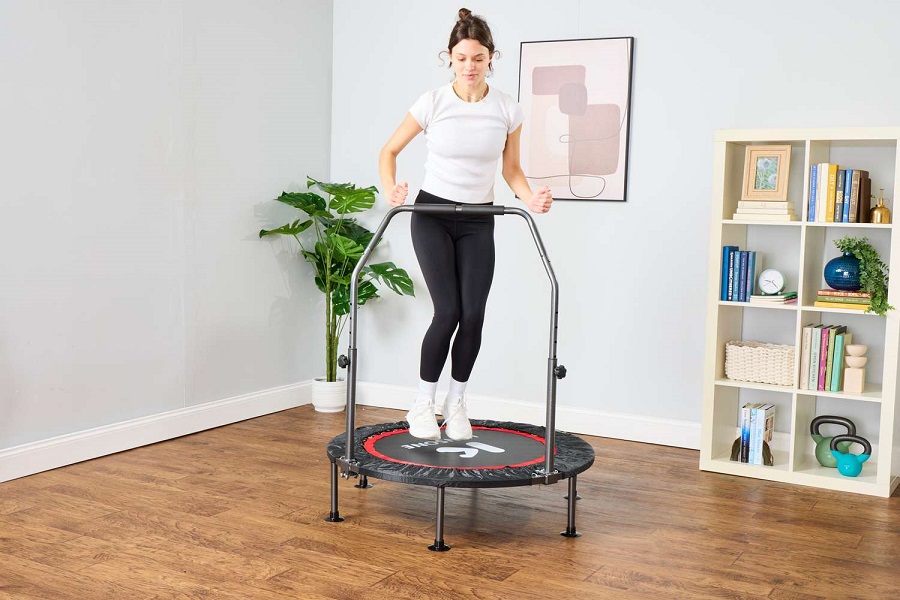

People interested in trampoline fitness singapore may consider buying a compact rebounder for home use. Product photographs often show a small piece of equipment in an uncluttered room, making the setup appear simple. The practical requirements are usually larger than the equipment footprint suggests.
Floor stability, ceiling clearance, noise, ventilation, storage and maintenance all affect whether a home rebound routine remains usable. Evaluating these factors before purchasing equipment can prevent an initially exciting idea from becoming a permanent obstacle in the living room.
The Working Area Is Larger Than the Frame
A rebounder may occupy a compact circle or rectangle while stored. Exercise requires space beyond those dimensions.
Participants need room for arm extensions, lateral movement and safe entry. Nearby furniture, shelves, screens and sharp corners can restrict movement even when they do not touch the equipment.
Ceiling fans and hanging lights require particular attention. The participant’s height, rebound height and overhead arm movement must all be considered together.
A room that fits the rebounder may still be unsuitable for a full workout.
Floor Stability Comes First
The equipment should sit on a level, stable surface according to the manufacturer’s instructions. Uneven flooring or soft improvised layers may allow the frame to move.
A protective mat can reduce floor marking and improve grip, but it should not make the setup unstable. Participants should confirm that every contact point remains secure before exercise.
Members using purpose-built facilities such as TFX Singapore do not need to recreate these conditions before each class. At home, the user is responsible for checking the environment every time equipment is moved.
Small shifts should not be ignored simply because the rebounder remains upright.
Noise Travels Beyond the Room
A rebounder may reduce some impact compared with jumping directly on a hard floor, but repeated movement can still produce sound and vibration.
In an HDB flat or condominium, downstairs and adjacent neighbours may experience the noise differently from the person exercising. Building structure, flooring and furniture placement influence how vibration travels.
Training at reasonable hours and communicating with neighbours can help, but they do not guarantee that the setup is suitable.
If the routine creates continuing disturbance, moving it to a dedicated facility may be the more sustainable option.
Ventilation Affects the Experience
Rebound workouts can produce significant heat and sweat. A small room without good airflow may become uncomfortable quickly.
Fans can improve ventilation, but their placement must not interfere with overhead movement or equipment stability. Air-conditioning may help with temperature while increasing energy use and requiring the room to remain closed.
Participants should also consider floor moisture. Sweat can reduce grip or affect the surface around the rebounder.
A towel, water bottle and safe airflow plan should be part of the setup rather than added after discomfort begins.
Storage Can Become the Main Barrier
The convenience of home equipment depends on how easily it can be stored and prepared. If furniture must be moved before every session, the workout begins with a household task.
Foldable equipment may still be heavy or awkward to handle. Repeated folding should follow the manufacturer’s guidance to avoid damaged components or trapped fingers.
Leaving the rebounder permanently open may not suit shared living areas. Other household members need space, and walkways should remain clear.
A realistic storage plan is as important as choosing the equipment itself.
Maintenance Is Easy to Overlook
Home users are responsible for checking the frame, mat, springs or cords, legs and fastening points. Wear may develop gradually and escape attention.
The equipment should be inspected according to its instructions. Loose or damaged parts should not be treated as minor inconveniences during repeated movement.
Cleaning also matters, particularly when the surface is exposed to sweat. Appropriate products should be used so that grip and materials are not damaged.
A low purchase price does not remove the need for maintenance and eventual replacement.
Coaching Is Not Included
Online videos can provide workout ideas, but they cannot always identify individual landing or posture changes. A home user may repeat the same mistake without recognising it.
Beginners may also struggle to select an appropriate progression. They may jump too high, increase cadence too quickly or copy advanced movements without building control.
A coached class provides real-time cues and modifications. It also offers a structured session rather than requiring the participant to design every interval.
Home training can still be useful, but its limitations should be acknowledged.
Household Interruptions Affect Consistency
Exercising at home removes travel, yet it introduces other interruptions. Work messages, children, deliveries, chores and shared-room needs can break the session.
Some participants can protect a clear training period at home. Others find that the environment makes it difficult to remain focused.
A class creates a defined appointment and separates exercise from household responsibilities. This external structure may improve adherence despite the travel involved.
Convenience should therefore be measured by completed sessions, not distance from the equipment.
The Cost Extends Beyond the Rebounder
The complete setup may involve a mat, suitable clothing, storage accessories, cleaning supplies and replacement parts. Some users may also change the room layout or cooling arrangements.
None of these costs automatically makes home equipment a poor choice. They simply belong in the decision.
A participant who enjoys short, frequent independent sessions may receive excellent value. Someone who wants instruction, group energy and varied programming may use the equipment less than expected.
Trying a class before purchasing can clarify personal preference.
Home and Class Training Can Complement Each Other
The choice does not need to be absolute. Participants may attend coached rebound classes and complete quieter supporting exercises at home.
Strength, mobility and balance work can improve class performance without reproducing high-cadence bouncing in the flat. These activities often require less space and generate less noise.
A home rebounder may also suit occasional controlled sessions if the environment is appropriate. The class can remain the main source of progression and technical feedback.
This mixed approach uses each setting for what it does well.
Evaluate the Whole Routine
A home rebound setup is successful when it is stable, considerate, easy to store and genuinely used. The equipment fitting through the door is only the beginning.
Prospective buyers should assess working clearance, floor conditions, neighbour impact, ventilation, maintenance and the household schedule. These factors determine whether the routine remains practical after the initial excitement fades.
Dedicated classes remove many environmental responsibilities while adding coaching and group structure. Understanding the trade-off allows participants to choose based on their real living situation rather than the apparent simplicity of a product photograph.

Comments are closed.