
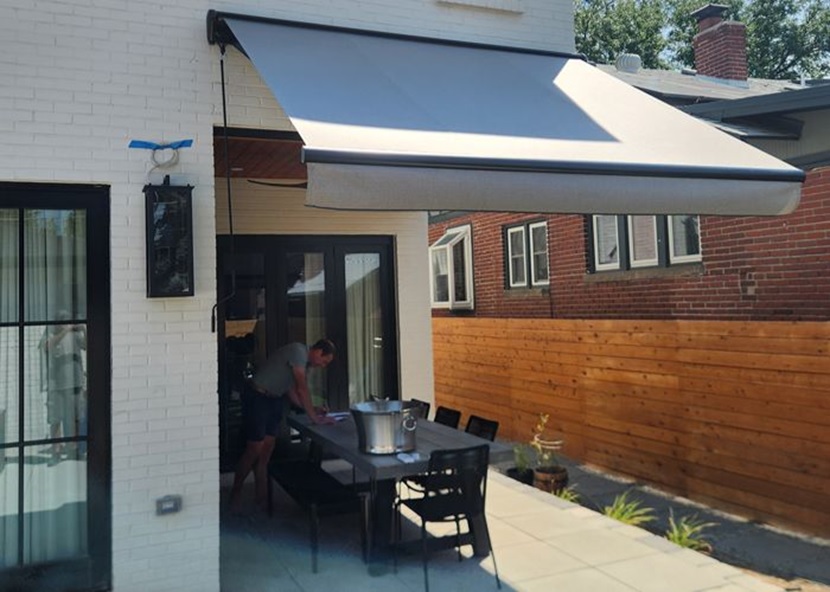

A patio or deck can provide extra space for dining, entertaining, and relaxing, but direct sunlight can make these areas uncomfortable during certain parts of the day. Permanent coverings provide shade but may also reduce sunlight when homeowners would rather have an open outdoor area. Motorized awnings offer a more flexible alternative by allowing homeowners to extend shade when they need it and retract the covering when they want more sunlight and an unobstructed outdoor environment.
Homeowners interested in creating adjustable shade can click here to explore options for patios, decks, and other outdoor living areas. A professionally planned system can account for the dimensions of the space, sun exposure, architectural features, and how homeowners typically use the area before an awning is selected and installed.
Adjustable Shade Gives You More Control
One of the biggest challenges with outdoor living is that conditions constantly change.
A patio that feels comfortable during the morning may receive intense sunlight several hours later. During another season, homeowners may prefer as much natural sunlight as possible.
Retractable awnings allow the space to adapt.
Instead of having permanent shade throughout the day, homeowners can extend the awning when direct sunlight becomes uncomfortable. When conditions improve, the awning can be retracted again.
This flexibility can be particularly useful over dining areas, outdoor seating arrangements, and decks that receive strong afternoon sun. Homeowners gain greater control without substantially changing the open character of the space.
Motorized Operation Adds Everyday Convenience
Retractable awnings can be operated manually or through a motorized system, but automation can make larger installations much easier to use.
With motorized awnings, homeowners don’t need to manually crank a large covering into position whenever conditions change. The system can instead extend or retract through its controls.
Convenience becomes especially valuable when the awning is used frequently. If homeowners have to complete a time-consuming manual process every time they want shade, they may eventually stop adjusting the covering altogether.
Motorization makes changing the configuration part of normal outdoor use. Homeowners can create shade for an afternoon gathering and retract the awning afterward without turning either task into a major chore.
Extend the Usability of Patios and Decks
Outdoor living spaces represent a significant investment, so homeowners naturally want to use them as often as possible.
Unfortunately, direct sunlight can make patios and decks difficult to enjoy during some of the best hours for outdoor activities. Seating surfaces may become hot, glare can interfere with reading or using electronic devices, and dining outdoors can become uncomfortable.
Adding adjustable shade can make these spaces more practical during periods when they might otherwise remain unused.
An awning can create a more comfortable area for eating lunch, spending time with family, entertaining guests, or simply relaxing outside.
Rather than building an entirely new covered structure, homeowners can improve the flexibility of an area they already have.
Shade Can Also Benefit Interior Spaces
The effects of an awning aren’t necessarily limited to the patio.
Windows and glass doors facing a sunny outdoor area can allow significant sunlight into adjacent rooms. Depending on the orientation of the home, this can create glare and make areas near the glass feel noticeably warmer.
Extending an awning can shade both the outdoor living space and nearby windows or doors.
The U.S. Department of Energy notes that window awnings can reduce solar heat gain, with effectiveness depending on factors such as window orientation, climate, and awning characteristics. Retractable awnings also allow homeowners to take advantage of solar warmth when desired by retracting them during cooler periods.
This ability to adjust shade can make an awning useful beyond the boundaries of the patio itself.
Design Should Complement the Home
An awning is a noticeable exterior feature, making appearance an important part of the planning process.
Homeowners should consider how the fabric, housing, and supporting components coordinate with siding, roofing, trim, windows, and doors. The objective is to create shade without making the awning look like an unrelated addition.
Fabric selection can influence the overall character of the installation. Some homeowners may prefer neutral materials that blend quietly into the exterior, while others may want the awning to provide visual contrast.
Size matters too. The awning should provide useful coverage without appearing disproportionately large for the area where it is installed.
Thoughtful planning can make the finished system feel like an intentional part of the home’s exterior design.
Consider Where the Sun Hits Your Property
Before installing motorized awnings, it helps to understand how sunlight moves across the outdoor area.
Observe the patio or deck at different times of day. An area that receives little direct sunlight in the morning may become fully exposed during the afternoon.
Seasonal differences should also be considered because the sun’s position changes throughout the year.
Knowing when and where shade is most needed helps determine appropriate awning placement and projection. It can also prevent homeowners from selecting a system based solely on how the space looks at one particular time of day.
A professional site evaluation can incorporate these observations along with measurements and structural considerations.
Weather Conditions Should Influence How the Awning Is Used
Retractable awnings are designed to provide adjustable coverage, but homeowners should still pay attention to changing weather.
Wind can place significant stress on an extended awning. Heavy precipitation may also create conditions where retracting the system is appropriate.
Homeowners should understand the operating recommendations for their specific product and follow manufacturer instructions regarding weather conditions.
Some systems may offer compatible sensors or automated features designed to respond to particular environmental conditions. Available technology varies by manufacturer and model, so these options should be discussed when comparing systems.
Automation can add convenience, but it doesn’t eliminate the need for homeowners to understand appropriate awning operations.
Think About Furniture and Outdoor Layout
Awning planning should consider more than the dimensions of the wall where the system will be mounted.
Homeowners should think about which parts of the outdoor space actually need shade. A dining table may require different coverage from a small seating arrangement, while larger patios may have multiple activity zones.
Furniture placement can therefore help determine the ideal projection and width.
The awning’s movement also needs to remain unobstructed. Exterior lighting, architectural details, nearby landscaping, and other fixtures should be considered before the final configuration is selected.
Planning the awning around the way the patio is genuinely used can produce a more practical result than simply installing the largest available system.
Professional Installation Matters
Motorized systems require careful installation because several components need to work together correctly.
The mounting location needs to provide appropriate structural support. Accurate positioning affects both appearance and operation, while electrical requirements must be addressed for the motor and controls.
Installers can evaluate mounting surfaces and identify potential obstacles before the system is ordered.
Professional installation also provides an opportunity for homeowners to learn how the awning operates, how it should be maintained, and when it should be retracted because of weather conditions.
These details can help protect the system and support reliable everyday operation.
Routine Care Helps Protect Your Investment
Like other exterior home features, awnings benefit from periodic maintenance.
Leaves and loose debris shouldn’t be allowed to accumulate on the fabric. Homeowners can also periodically inspect visible components for unusual wear or damage.
Fabric should be cleaned according to manufacturer recommendations rather than with harsh products that could affect its appearance or performance.
The motorized mechanism should operate smoothly without unusual sounds or movement. If something appears incorrect, homeowners should avoid forcing the system and have the problem evaluated instead.
Following product-specific maintenance instructions can help keep the awning looking and functioning as intended.
Create Shade Without Permanently Closing Off the Outdoors
Outdoor spaces are most useful when they can adapt to changing conditions. Permanent structures may provide dependable coverage, but they don’t give homeowners the same ability to alternate between sunlight and shade. Motorized awnings provide that flexibility, making it easier to adjust patios and decks according to the weather, time of day, and activity.
For homeowners interested in adding convenient adjustable shade, Conservation Motorized Screens and Awnings Main can help evaluate outdoor areas and explore awning options suited to the property’s dimensions and design. Professionally installed motorized awnings can make existing outdoor living areas more adaptable without sacrificing the open environment that makes patios and decks enjoyable.

Comments are closed.